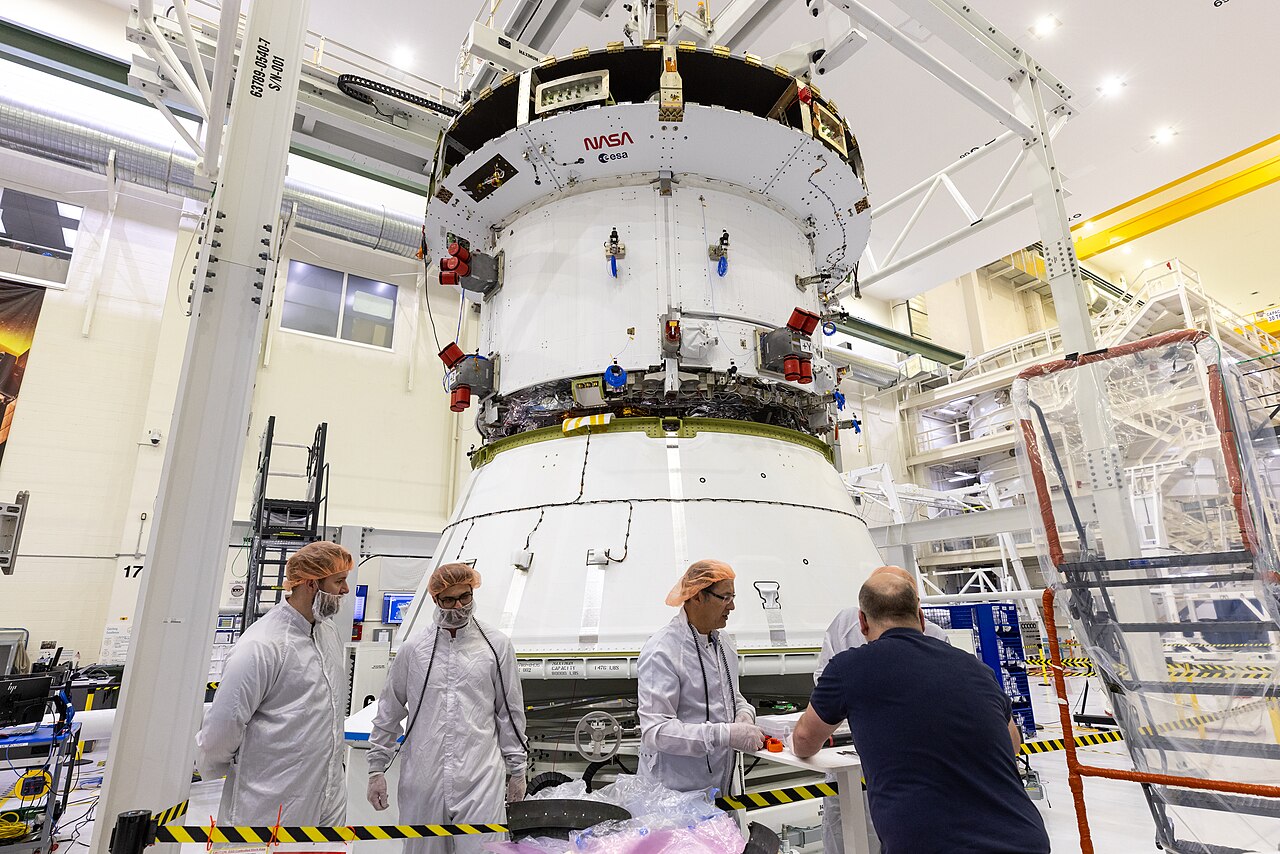
Artemis III
LEO Rendezvous, Docking & Spacesuit Testing
The mission that ensures Artemis IV's crew lands safely on the Moon. Every system validated in low Earth orbit — before humanity's first footstep in 55 years.
Mission under the 2026 Ignition Restructure
Artemis III was repurposed from a crewed lunar landing to a LEO validation flight by NASA Administrator Jared Isaacman in March 2026. Crew and launch date are TBD pending completion of xEMU qualification testing and Starship HLS LEO readiness review.
What This Mission Does
Three Core Objectives
Each objective is a gate that must pass before the crew of Artemis IV can safely land on the Moon.
xEMU Spacesuit Testing
The crew conducts the first crewed tests of NASA's next-generation xEMU (Exploration Extravehicular Mobility Unit) spacesuits — the suits designed for walking on the lunar surface. Testing in microgravity validates mobility, life support, and communication systems before crew commits to the Moon's surface.
Starship HLS Rendezvous & Docking
A SpaceX Starship Human Landing System (HLS) will be pre-positioned in low Earth orbit. The Artemis III crew aboard Orion will rendezvous, dock, and conduct crew transfer procedures with Starship HLS — validating the docking adapter and all handover systems that will be critical for the Artemis IV landing.
De-risk Before the Landing
Under the Ignition restructure (2026), Artemis III was repurposed from a landing mission to a final validation flight. No crew will descend to the lunar surface — the mission exists to ensure every system is proven in the real space environment before the historic first crewed landing on Artemis IV.
Background
Understanding Artemis III
The key questions answered.
Why was Artemis III repurposed?
In the original Artemis architecture, Artemis III was the first crewed landing. Under the March 2026 Ignition restructure by Administrator Jared Isaacman, NASA decided to add an additional validation step — using Artemis III to test the xEMU spacesuits and Starship HLS docking in LEO — before committing crew to an actual lunar surface landing on Artemis IV. This reduces mission risk significantly.
What is xEMU?
The Exploration Extravehicular Mobility Unit (xEMU) is NASA's next-generation spacesuit, designed from the ground up for lunar surface operations. Unlike the Apollo A7L suits or the ISS Extravehicular Mobility Unit (EMU), xEMU is specifically engineered for the Moon's South Pole environment — extreme cold in permanently shadowed craters, regolith dust, and the need for greater lower-body mobility (the original Apollo suits couldn't allow astronauts to kneel).
What is SpaceX Starship HLS?
Starship HLS (Human Landing System) is the SpaceX variant of Starship selected by NASA in 2021 as the Artemis lunar lander. It is an enormous vehicle — over 160 feet tall — and is launched separately from Orion. The crew transfer from Orion to Starship HLS in lunar orbit (or LEO for Artemis III), descend to the surface, conduct moonwalks, and then ascend back to rendezvous with Orion for the trip home.
How the Ignition Restructure changed Artemis III
Under the original plan, Artemis III would have been the first crewed lunar landing. The Ignition restructure redirected $20 billion toward building a permanent Moon Base, cancelled the Lunar Gateway, and added this validation step to reduce risk before committing crew to a surface landing.
Read the full Moon Base planIn Their Words
On the Plan
“The Moon is not the finish line. It is the first step. We must learn to live and work in deep space before we can call ourselves a spacefaring civilization.”
Pam Melroy
NASA Deputy Administrator
“Artemis III is how we make sure Artemis IV's crew comes home safe. Every hour we spend testing in LEO is an hour we don't spend troubleshooting on the lunar surface.”
Howard Hu
NASA Orion Program Manager