Artemis I
Uncrewed Test Flight
1.4 million miles. 25.5 days. Zero crew. The mission that proved SLS and Orion were ready to carry humans back to the Moon.
Background: Artemis I launch, Nov 16, 2022 · NASA/Joel Kowsky
Total distance
1.4 million miles
Mission duration
25 days, 10 hr, 53 min
Max distance
268,563 mi from Earth
Launch
Nov 16, 2022 — 01:47 UTC
Splashdown
Dec 11, 2022 — 17:40 UTC
Reentry temperature
~5,000 °F (2,760 °C)
Reentry speed
24,500 mph (39,500 km/h)
Secondary payloads
10 CubeSats deployed
Mission Overview
Why Artemis I Mattered
Before any human could fly to the Moon again, every single system had to be proven in the harshest environment imaginable.
Artemis I was the first integrated test of the Space Launch System (SLS) and Orion spacecraft — the two centerpieces of NASA's return to the Moon. Unlike Apollo, where the Saturn V had previously flown unmanned before carrying humans, the entire Artemis architecture had never flown together.
The mission's primary objective was validation: confirm that SLS could reach orbit, that Orion's life-support and navigation systems could survive deep space for weeks, and — most critically — that Orion's Avcoat heat shield could withstand the extreme heating of lunar-return reentry at 24,500 mph.
Secondary objectives included deploying 10 CubeSats and gathering deep-space radiation data from the Helga and Zohar mannequin torsos — the largest radiation study ever conducted on a spacecraft designed for humans in deep space.
Day by Day
Mission Timeline
Key milestones across the 25.5-day journey from launch to splashdown.
NASA/Joel Kowsky
Nov 16, 2022
Launch — "We Are Going"
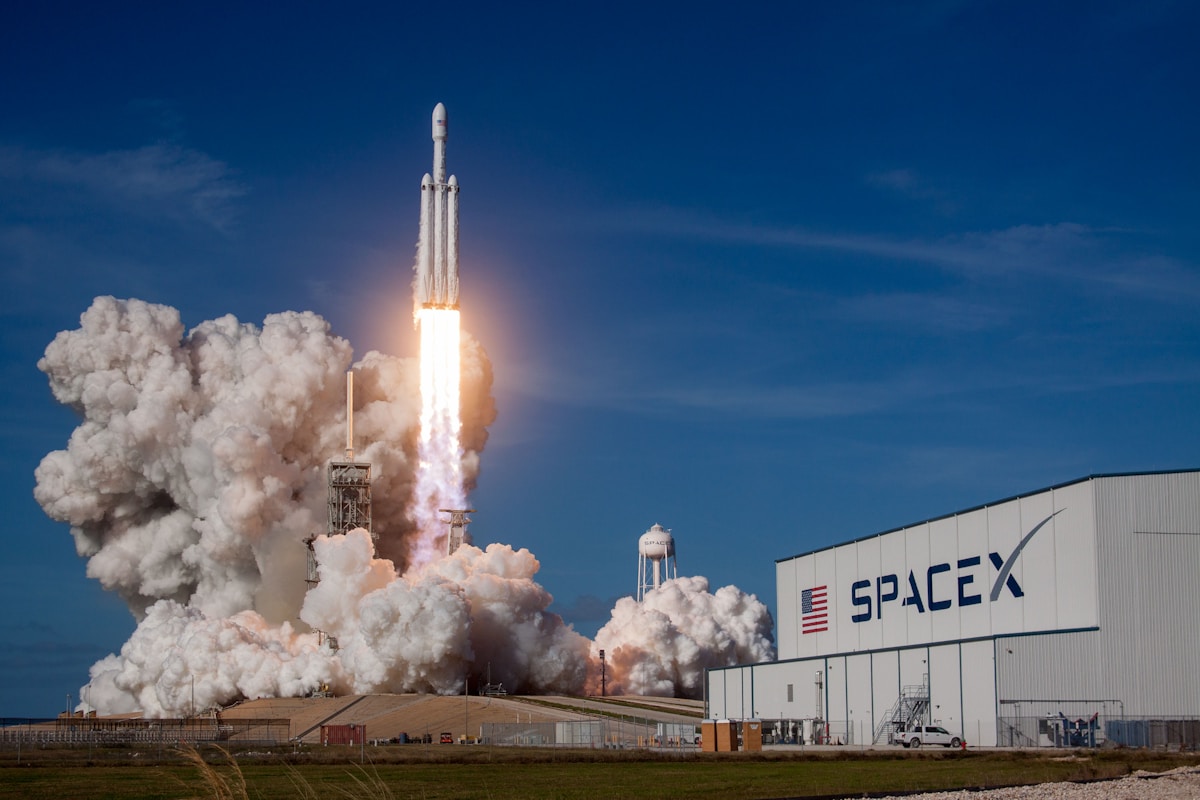
SLS lifts off from Kennedy Space Center Launch Complex 39B at 01:47 UTC. At 8.8 million pounds of thrust, it's the most powerful rocket successfully flown. The crowd at KSC chanted "Go Artemis" as the night sky lit up.
Nov 16, 2022 — T+2 hours
Trans-Lunar Injection
The Interim Cryogenic Propulsion Stage (ICPS) fires for 18 minutes and 2 seconds, sending Orion on a trajectory toward the Moon at over 22,600 mph. Orion then deploys 10 secondary CubeSat payloads into deep space.
NASA
Nov 21, 2022
Lunar Flyby — 81-Mile Closest Approach
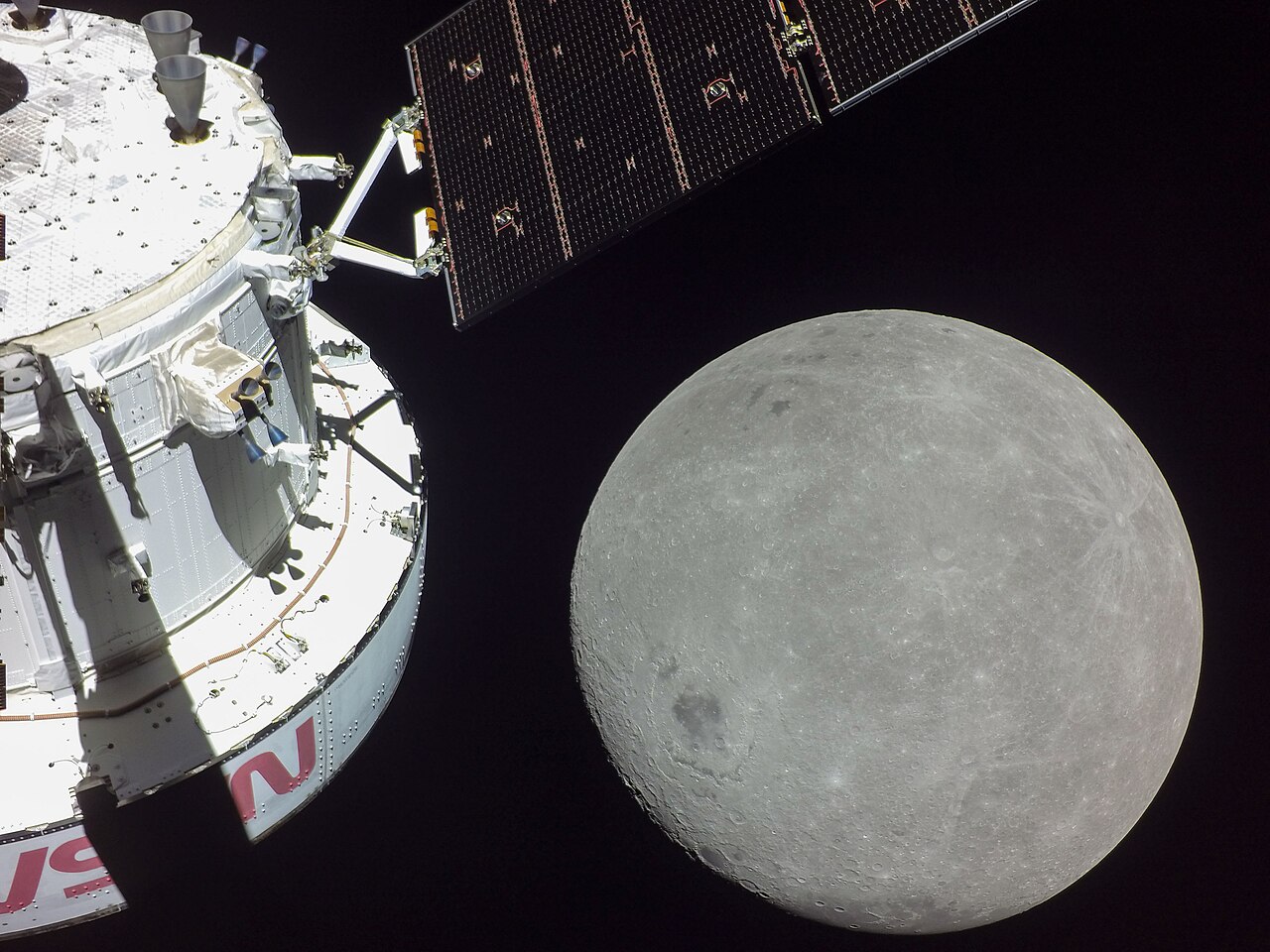
Orion passes within 81 miles (130 km) of the lunar surface — close enough to use the Moon's gravity to slingshot into the distant retrograde orbit. The Optical Navigation Camera captures stunning close-up imagery of craters near the lunar South Pole.
Nov 25, 2022
Distant Retrograde Orbit Insertion
Orion inserts into a 40,000 × 70,000 mile Distant Retrograde Orbit (DRO) around the Moon — a gravitationally stable orbit no crewed spacecraft had ever used. Orion spent 6 days there, reaching a record 268,563 miles from Earth — the farthest any spacecraft designed to carry humans has traveled.
Dec 1, 2022
Return Powered Flyby
Orion fires its main engine again to exit the DRO and begin the return journey. A second close lunar flyby — this time at 79 miles — provides the gravity assist needed to set up the precise trajectory for Earth reentry.
Dec 11, 2022
Reentry & Splashdown — Pacific Ocean
Orion performs a "skip entry" — dipping into the upper atmosphere, bouncing back out, then reentering for a final descent. This technique allows precision landing targeting and reduces g-forces on future crew. Splashdown occurs at 17:40 UTC off the coast of Guadalupe Island, Baja California. Recovery ship USS Portland retrieves the capsule.
What We Learned
Key Findings & Outcomes
The mission generated critical data that directly shaped Artemis II and future crewed missions.
SLS performed flawlessly
All four RS-25 engines and both solid rocket boosters performed within specs. SLS cleared the tower, max-Q, and staging events without anomaly — validating the Block 1 vehicle for crewed flight.
Orion thermal protection system validated
The Avcoat ablative heat shield withstood reentry temperatures of ~5,000 °F at 24,500 mph. The skip-entry trajectory was executed precisely, landing within 2 miles of the target point.
Distant Retrograde Orbit — new human spaceflight record
At 268,563 miles from Earth on November 28, 2022, Orion surpassed the Apollo 13 record of 248,655 miles — the farthest any spacecraft designed for humans had traveled from Earth.
Heat shield ablator loss — changed Artemis II trajectory
Post-recovery inspection found more-than-expected ablation and minor charring in some Avcoat tiles, attributed to the novel skip-entry heating profile. NASA redesigned the Artemis II return trajectory to a steeper 14-minute direct reentry, eliminating the skip. This was the single largest mission outcome that affected Artemis II planning.
Several CubeSats failed to operate
NEA Scout, OMOTENASHI, and Team Miles all failed to establish communication after deployment. LunaH-Map had a propulsion issue that prevented it from achieving its intended lunar orbit. These were secondary payloads on a best-effort basis; none affected the primary mission.
Deep-space radiation data collected
The Helga/Zohar radiation phantom study collected high-quality data across the entire cislunar transit and DRO dwell. The dataset is the most comprehensive female-torso radiation exposure dataset ever gathered in deep space, directly informing Artemis crew protection.
Science & Technology
Who (and What) Flew
Artemis I carried three manikins, ten CubeSats, and several cultural artifacts on the 1.4-million-mile journey.
Commander Moonikin Campos
A manikin torso in the Commander's seat wearing the Orion Crew Survival System suit. Equipped with two radiation sensors (CAMPOUT). Named after Arturo Campos, a NASA engineer key to saving Apollo 13.
Helga & Zohar
Two phantom torso manikins representing female anatomy — a demographic historically understudied in spaceflight radiation research. Zohar wore a radiation protection vest (AstroRad); Helga did not. The data will directly inform radiation shielding design for Artemis II and III crew.
Shaun the Sheep
A Shaun the Sheep toy (from Aardman Animations / ESA's educational collaboration) flew as a zero-g indicator in the Orion capsule — the first time a sheep has flown to the Moon.
Snoopy Zero-G Indicator
A Snoopy plush toy in a miniature spacesuit flew as the official zero-g indicator, continuing the tradition from Apollo (where Snoopy was the call sign of the Apollo 10 lunar module).
10 CubeSat Secondary Payloads
Deployed from the ICPS during trans-lunar injection. All were best-effort secondary payloads — their success or failure did not affect the primary mission.
ArgoMoon
Italy / ESA
Documented the ICPS and Orion separation with high-resolution imagery.
BioSentinel
NASA Ames
First biology experiment beyond low Earth orbit since Apollo — studied the effects of deep-space radiation on yeast cells over months.
CubeSat for Solar Particles (CuSP)
SwRI
Space weather sensor — monitored energetic particles from the Sun in cislunar space.
LunaH-Map
Arizona State University
Attempted to map hydrogen (potential water ice) in permanently shadowed craters at the lunar South Pole. Propulsion issue prevented full mission completion.
EQUULEUS
JAXA / University of Tokyo
Reached the Earth-Moon L2 Lagrange point to observe the Earth's plasmasphere and demonstrate trajectory control.
OMOTENASHI
JAXA
Attempted the smallest-ever lunar lander, but lost contact during the flight.
Team Miles
Miles Space (Tampa, FL)
Private CubeSat testing an ion thruster using water-based propellant. Communication was never established.
NEA Scout
NASA MSFC
Solar sail spacecraft intended to fly to a near-Earth asteroid. Communication was never established.
268,563 miles
from Earth
On November 28, 2022, Orion reached its maximum distance from Earth — 268,563 miles — surpassing the previous record set by Apollo 13 (248,655 miles, April 1970). This made Orion the farthest spacecraft ever flown that was designed to carry humans.
At that distance, a radio signal takes about 1.4 seconds to travel one way. Earth appears as a small blue marble. The entire history of human civilization fits within a disk smaller than a thumbnail held at arm's length.
In Their Words
Voices of Artemis I
“Orion has returned home. This investment will pay dividends for generations to come. We are going back to the Moon — and this time, we're going to stay.”
Bill Nelson
NASA Administrator, December 11, 2022
“This is a historic day. It's historic for NASA, it's historic for the United States, and it's historic for all humanity.”
Jim Free
NASA Associate Administrator for Exploration Systems Development
“We came in with a set of objectives and we nailed every single one of them. The Artemis generation is here.”
Howard Hu
NASA Orion Program Manager