Artemis I through V
The Mission Sequence
Five missions spanning from a validation flight to the birth of humanity's first permanent Moon Base. Each step builds on the last.
Interactive Timeline
All Five Missions
Click any mission to expand full details — crew, highlights, discoveries, and key stats.
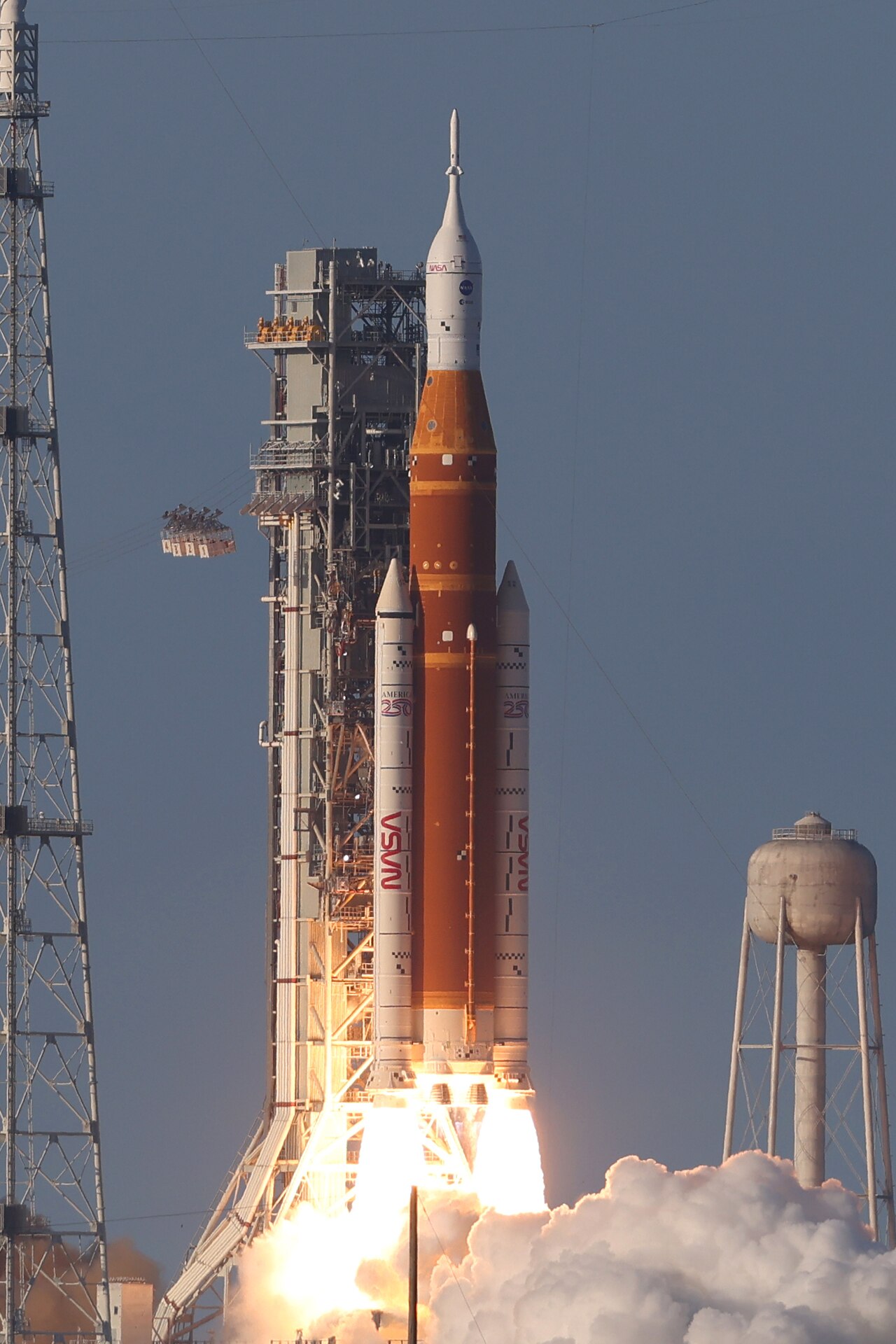
Artemis II · April 1 – April 10, 2026
Four astronauts aboard Orion "Integrity" became the first humans to fly a lunar trajectory since Apollo 17 in 1972. They broke the Apollo 13 distance record, witnessed a 54-minute total solar eclipse from the far side of the Moon, and discovered two new craters bearing new names.
Distance
252,760 miles
Duration
9 days, 1 hr, 32 min
Key Highlights
- Flew 252,760 miles from Earth — new human distance record
- Came within 4,067 miles of the lunar surface
- Witnessed a 54-minute total solar eclipse from the Moon's far side — never seen by humans before
- Orion capsule named "Integrity" by the crew
- First non-American (Jeremy Hansen, CSA) on a lunar mission in history
- Orion flew steeper 14-minute reentry to protect the updated heat shield
“When you see Earth from a quarter million miles out, it is so small, so impossibly beautiful, and so clearly alone. You realize every person you have ever known — every story, every war, every dream — is on that pale dot.”
— Reid Wiseman, Artemis II Commander, April 2026
Findings & Notes
- →Two previously unnamed craters identified: the crew proposed 'Integrity' (after their Orion capsule) and 'Carol' (Commander Wiseman named it after his late wife)
- →Earth appears as a marble-sized object from 252,000 miles — the crew reported profound perspective shift about the fragility of our planet
- →Cislunar communication and navigation systems performed without disruption — critical validation for Artemis III
Crew
Why Five Missions?
Unlike Apollo — which was primarily a race — Artemis is designed for sustained presence. Each mission validates hardware, tests procedures, and establishes infrastructure for the next.
Artemis I proved SLS and Orion could work together. Artemis II proved humans could safely travel to lunar vicinity. Artemis III will validate commercial lander docking in orbit. Artemis IV achieves the landing. Artemis V breaks ground on the Moon Base.
The March 2026 “Ignition” restructure under Administrator Isaacman redirected the program away from the Lunar Gateway station toward direct surface landings — accelerating the path to a permanent lunar outpost.